
Greek Orthodox Baptism Checklist: Everything You Need for a Christening in Greece
A Greek Orthodox baptism checklist is usually the first thing parents ask me for once the date is set, closely followed by “and who buys what, us or the godparent?”. The list is not long, but it is full of small things that are easy to forget in the final week, especially if you are planning from abroad.
As a wedding and baptism photographer based in Kalamata, I see up close what is actually used inside the church and what stays in the box. This guide gives you a complete, practical checklist: the items for the ceremony, the baby’s clothes, the documents, everything for your guests, and a timeline so nothing is left to the last minute.
Quick answer: For a Greek Orthodox baptism you need the ladopana set (oil sheet, one large and one small towel, white underclothes), a small bottle of olive oil, a bar of white soap, the baptism candle, a cross and a new outfit for the baby. On the paperwork side you need the child’s birth certificate, the parents’ ID and the godparent’s certificates. Witness pins, favours, decoration and a photographer complete the planning.
Contents
Greek Orthodox baptism checklist: what you need in church
These are the items the priest and the godparent use during the ceremony. Most churches ask for more or less the same things, but every parish has its own habits, so check with your priest before you shop.
The ladopana
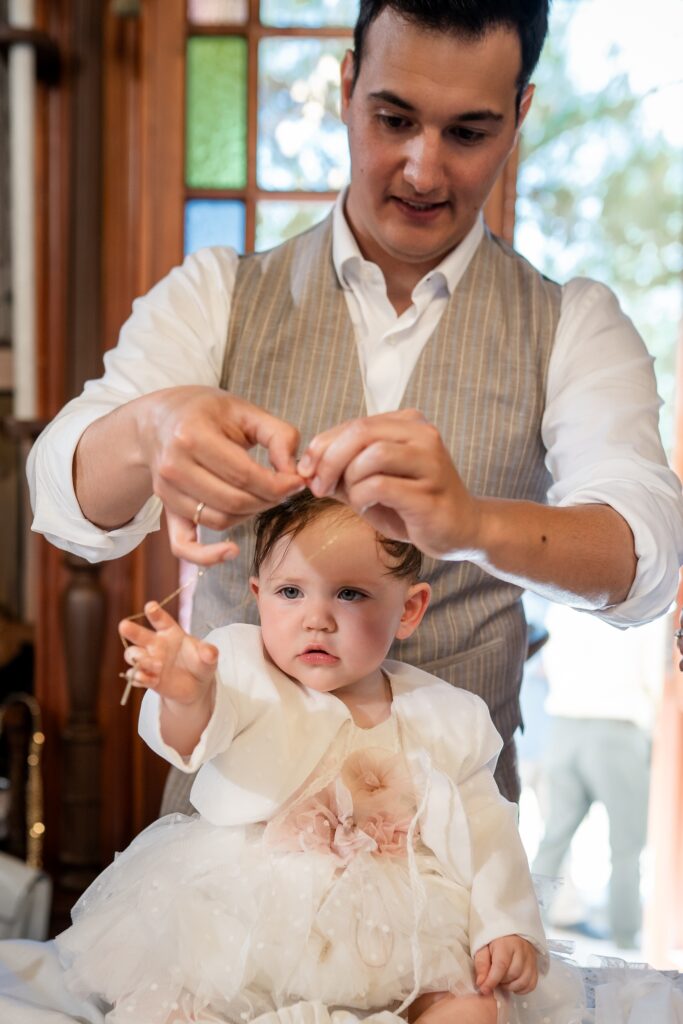
“Ladopana” (literally “oil cloths”) is the name for the whole set that wraps the baby after the font:
- The oil sheet: the large white or ivory cloth in which the godparent receives the child.
- One large towel to dry the baby.
- One small towel for the hands of the priest and the godparent.
- White underclothes: a vest or bodysuit and a cap, worn first, directly over the oil.
Oil, soap and the candle
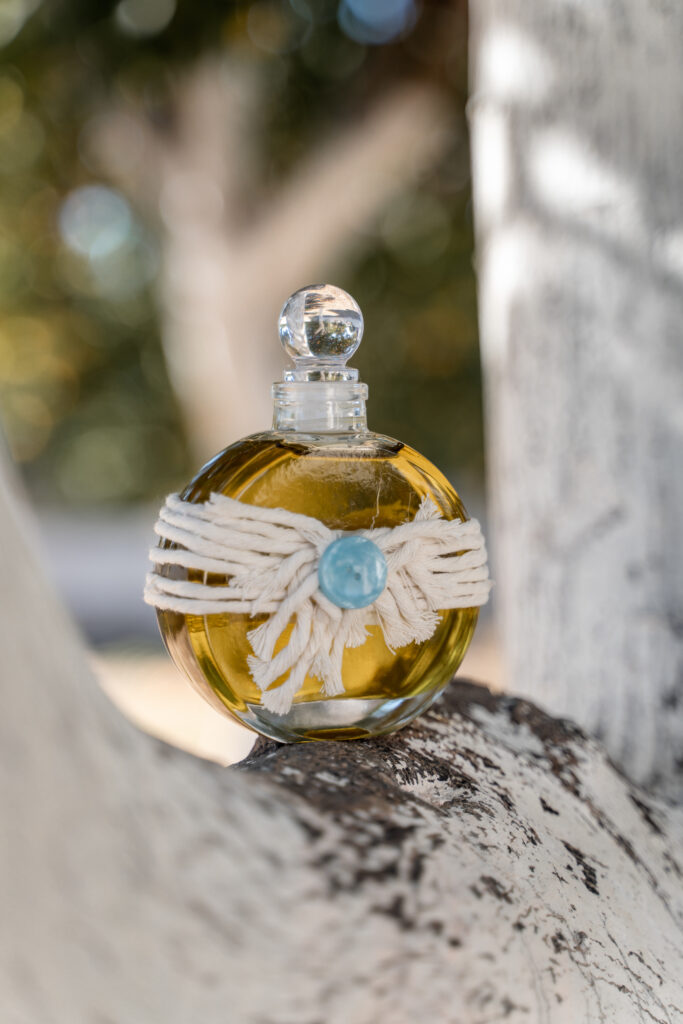
- A small bottle of olive oil. The priest blesses it and the child is anointed with it.
- A bar of white soap, so the priest and godparent can wash their hands after the oil.
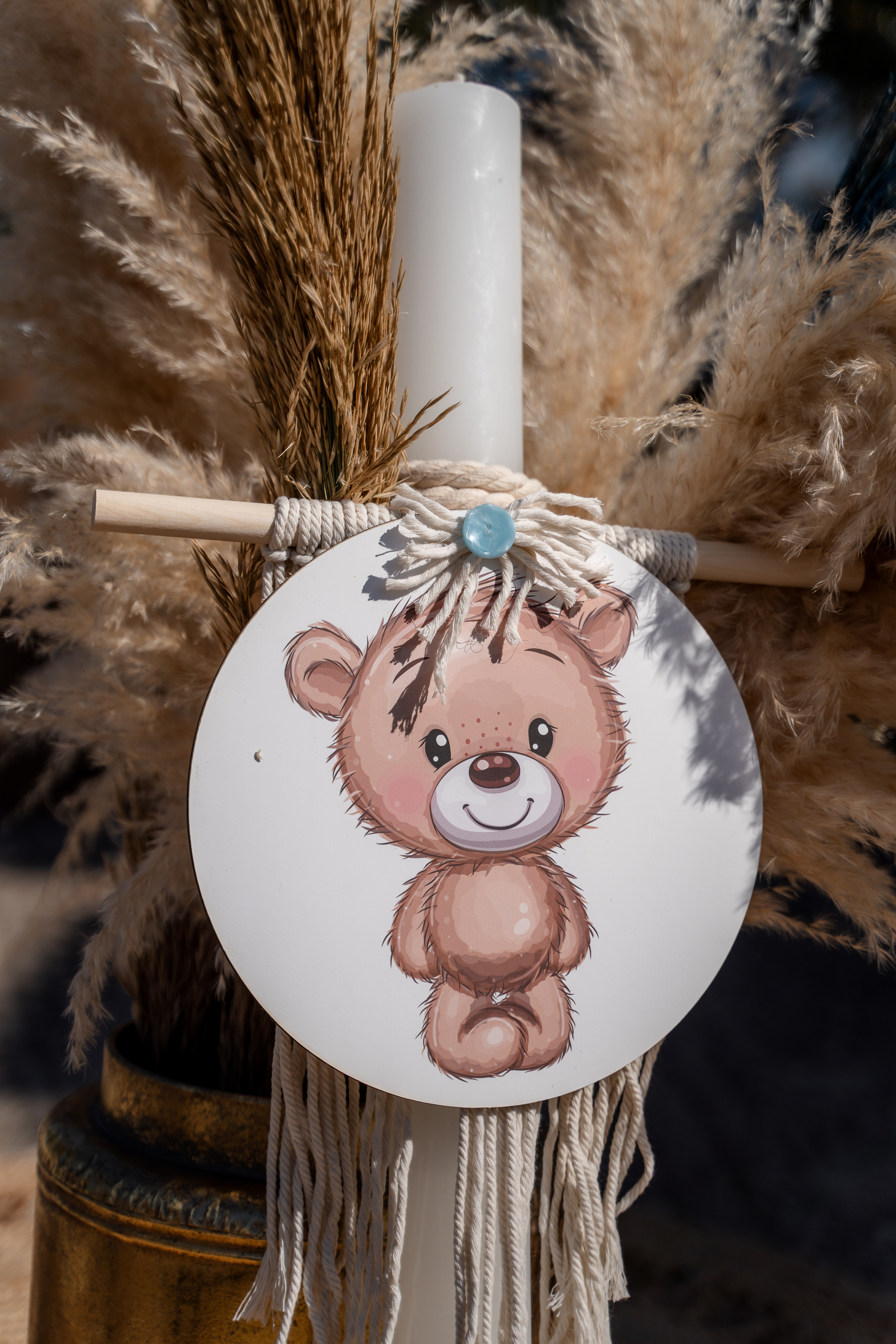
- The baptism candle (lambada), held lit by the godparent during the walk around the font. In many Greek parishes three small candles for the font are also customary. This is one of the details that varies from church to church.
The cross and the baptism outfit
- A cross on a chain, usually gold, placed on the child right after the ceremony.
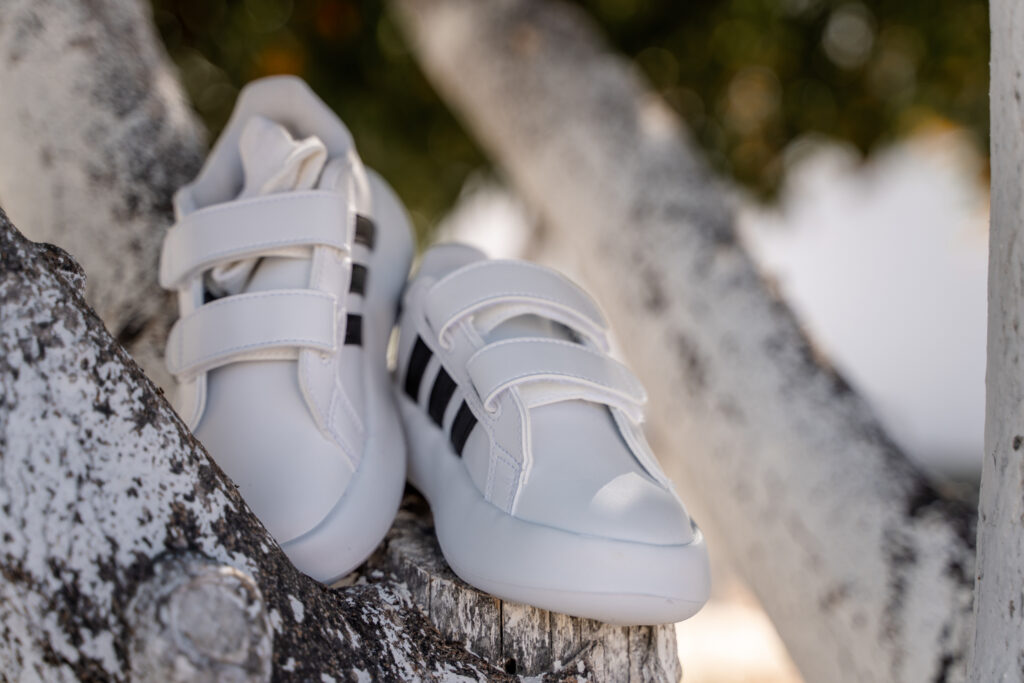
- The baptism outfit: a new white or light-coloured set of clothes worn after the font, with shoes and socks.
- The baptism box or case, which holds everything together. It is not required for the ceremony, but it keeps things organised and looks lovely next to the font.
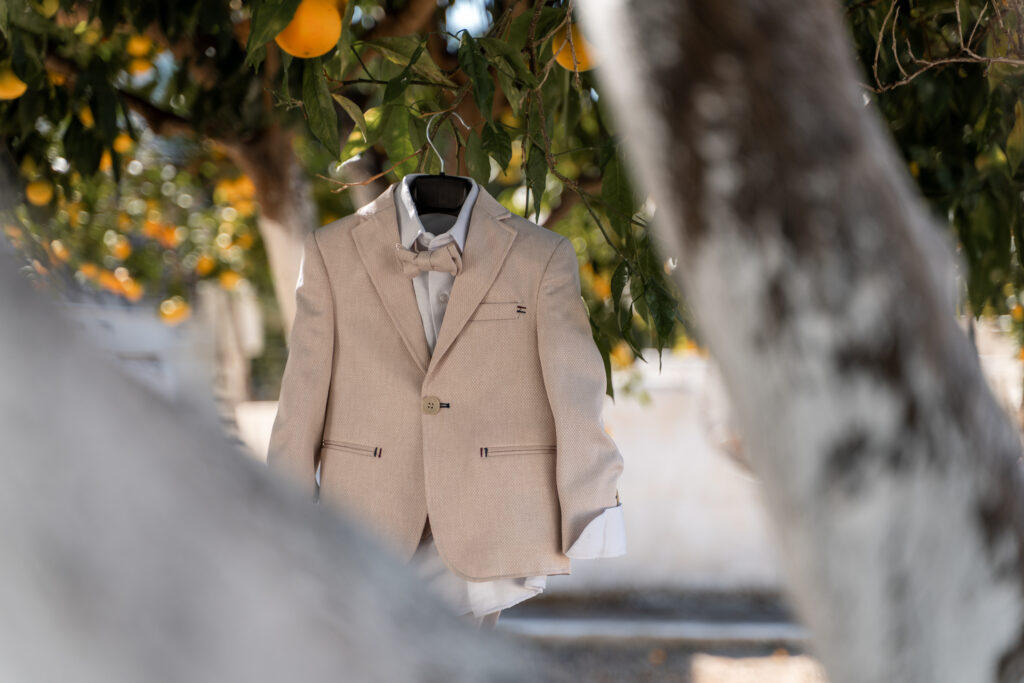
To understand what happens with each of these inside the church, read my step-by-step guide to the Greek Orthodox christening.
What the godparent buys and what the parents cover
By tradition, the godparent provides everything for the ceremony itself: the ladopana, the oil, the candle, the cross and the baptism outfit, and often the witness pins too. The parents usually take care of the reception, the favours, the decoration and the photography.
In practice, many families today share things differently, and that is perfectly fine. What matters is to talk about it early and clearly, so that nothing is bought twice or, worse, not at all. A shared list on your phone with a name next to each item settles it in five minutes.
Greek Orthodox baptism checklist: the documents
According to the Holy Metropolis of Mani, a child’s baptism requires:
- The child’s birth certificate (in Greece, the registry birth record issued “for baptism”), handed to the parish priest at least one week before the ceremony.
- The parents’ ID, as they sign in front of the priest for the child’s name.
- The godparent’s papers: a birth or baptism certificate, plus a family status or marriage certificate.
- Special declarations where needed, for example when one parent cannot be present.
The godparent must be an adult, baptised Orthodox Christian, and cannot be the child’s parent, a clergyman or a monastic. Details vary slightly between dioceses, so always confirm with your parish. If you live abroad, contact the parish and the Greek consulate early about which documents need translation or certification.
After the ceremony: registering the baptism
The baptism is registered at the civil registry using the certificate issued by the church. According to Greece’s National Registry of Procedures (MITOS), it should be declared within 90 days of the ceremony, free of charge, by a parent, a godparent or a close relative. It can also be done online through gov.gr, and residents abroad declare it at their consulate.
What you need for your guests and the reception
- Witness pins (martyrika): small pins or keepsakes worn by guests as “witnesses” of the baptism.
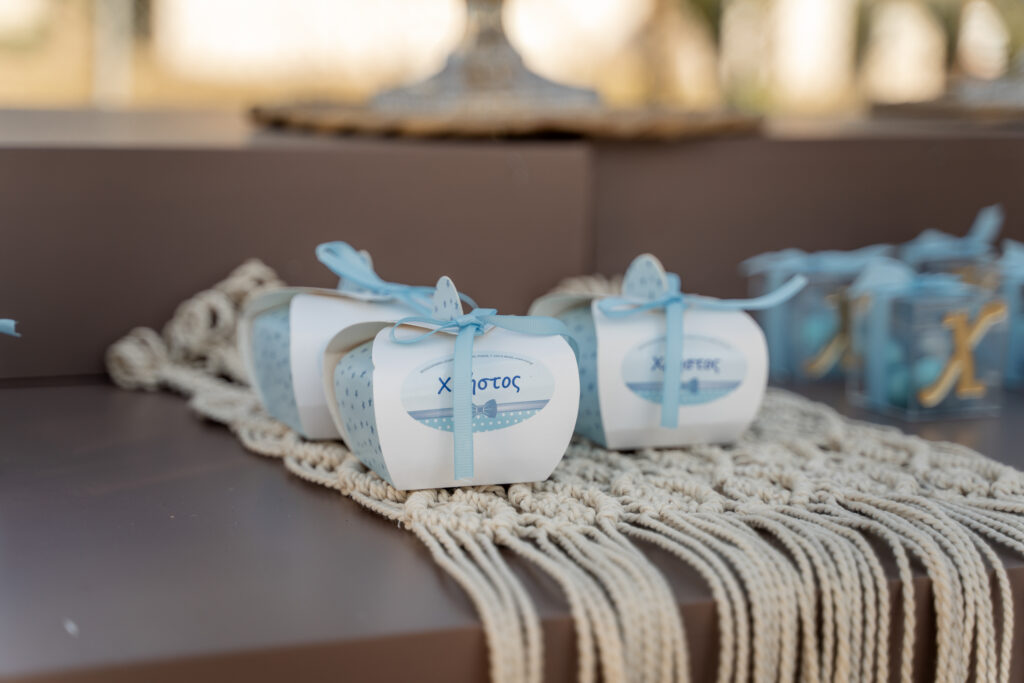
- Favours (bombonieres): sugared almonds in tulle. Order a few more than your guest count.
- Invitations, printed or digital.
- Decoration for the church, the font and the welcome table.
- A guest book for wishes from the people you love.
- The reception venue and menu. For ideas, see my guide to venues in Kalamata and Messinia.
- Something for the children: a small gift or an activity corner makes a real difference when there are many little guests.
If you have not chosen a church yet, take a look at the most beautiful churches in Messinia for a wedding or baptism.
The day bag: the small things that save the day
You will not find these on any official list, but they are what tends to be missing just when you need it:
- A second outfit for the baby, for the reception.
- Nappies, wipes and a spare towel.
- The baby’s milk or food, and a dummy.
- A favourite toy for the difficult moments.
- A bag for the oily clothes and cloths.
- A lighter for the candle.
- A cardigan or small blanket, especially in stone churches and in the cooler months.
Baptism photographer: when to book
The photographer is one of the first things worth booking, together with the church and the venue. The candle, the ladopana, the outfit and the cross are part of your story, which is why I always photograph them before the ceremony begins. If they are gathered in one place when I arrive, we save precious time.
To see what a photo session includes, read my guide to baptism photographer cost in Greece and browse real stories in my portfolio. If you are thinking of combining two celebrations, there is also a guide to a wedding and baptism on the same day.
Greek Orthodox baptism checklist: a planning timeline
- 3 to 6 months before: church and date, godparent, reception venue, photographer.
- 2 months before: invitations, favours, witness pins, decoration.
- 1 month before: baptism outfit, ladopana, candle, cross. Do not buy the clothes too early, because babies grow fast.
- 2 weeks before: birth certificate and the godparent’s papers.
- 1 week before: hand the documents to the priest and confirm times with everyone involved.
- The day before: pack the baptism box and the day bag.
Tips from a baptism photographer
- Ask the priest exactly what the church requires before you buy anything.
- Try the outfit and shoes on your child a few days ahead.
- Choose clothes that go on easily: the baby is dressed while still oily and often tired.
- Fit the ceremony time around your child’s sleep and meals as far as you can.
- Put one person in charge of the box and the bag, so the parents can live the moment.
- Arrive at the church a little early. The calm before the guests arrive gives some of the most beautiful photographs.
Greek Orthodox baptism checklist: frequently asked questions
What do you need for a Greek Orthodox baptism?
The ladopana set (oil sheet, large and small towel, white underclothes), a small bottle of olive oil, white soap, the baptism candle, a cross and a new outfit for the baby. Each parish may ask for something extra, so check with your priest.
What does the godparent buy for a Greek baptism?
By tradition the godparent buys the ladopana, the oil, the candle, the cross and the baptism outfit, and often the witness pins. Many families now share the costs differently, so it is best to agree early.
What documents are needed for a baptism in Greece?
The child’s birth certificate, the parents’ ID and the godparent’s certificates (birth or baptism, and family status or marriage). Confirm the exact list with your parish.
How early should we start planning?
Ideally three to six months ahead for the church, venue and photographer. The ceremony items and clothes are usually bought about a month before.
What are martyrika?
Small pins or keepsakes, usually with a cross, given to guests as “witnesses” of the baptism.
When must the baptism be registered?
Within 90 days of the ceremony, with the certificate from the church. Registration is free and can also be done online through gov.gr.
What should I pack for the baby on the day?
A second outfit, nappies, wipes, milk or food, a dummy and a favourite toy, plus a bag for the oily clothes.
Let’s plan your baptism photography together
Now that you have your Greek Orthodox baptism checklist, the best part remains: enjoying the day. If you would like to keep it forever in photographs, get in touch or book your date. I photograph baptisms across Messinia, Arcadia, Laconia and Athens.